

What’s In This Guide
- What Does Vendor Delivery Coordination Mean in a Commercial Relocation?
- Why Does Vendor Coordination Matter for Connecticut Facilities Teams?
- What Goes Wrong When Vendor Deliveries Arrive Unmanaged?
- How Does the Vendor-to-Warehouse-to-Destination Workflow Work?
- What Coordination Factors Shape the Relocation Timeline?
- Frequently Asked Questions
- Ready to Coordinate Your Vendor Deliveries the Right Way?
A commercial relocation rarely involves one truck and one origin point. New workstations ship from one manufacturer, seating from another, technology from a third, and signage from a fourth. Each vendor runs its own production schedule, and none of them coordinate with each other. When those shipments all point at a building that is still under construction or not yet released for occupancy, facilities managers inherit a receiving problem on top of a moving problem.
This is where logistics services in Connecticut earn their place in a relocation plan. A logistics partner accepts vendor freight before move-in, inspects and inventories every shipment, stages assets in installation order, and delivers them to the new site exactly when crews are ready to place them.
Quick Facts
- Vendor shipments should route to a warehouse, not an unfinished building.
- Dock-side inspection documents damage before freight carriers leave.
- Itemized inventory ties every carton to a room and floor plan.
- Staging in installation order prevents double handling on site.
- Sequenced delivery windows protect elevators, docks, and business continuity.
What Does Vendor Delivery Coordination Mean in a Commercial Relocation?
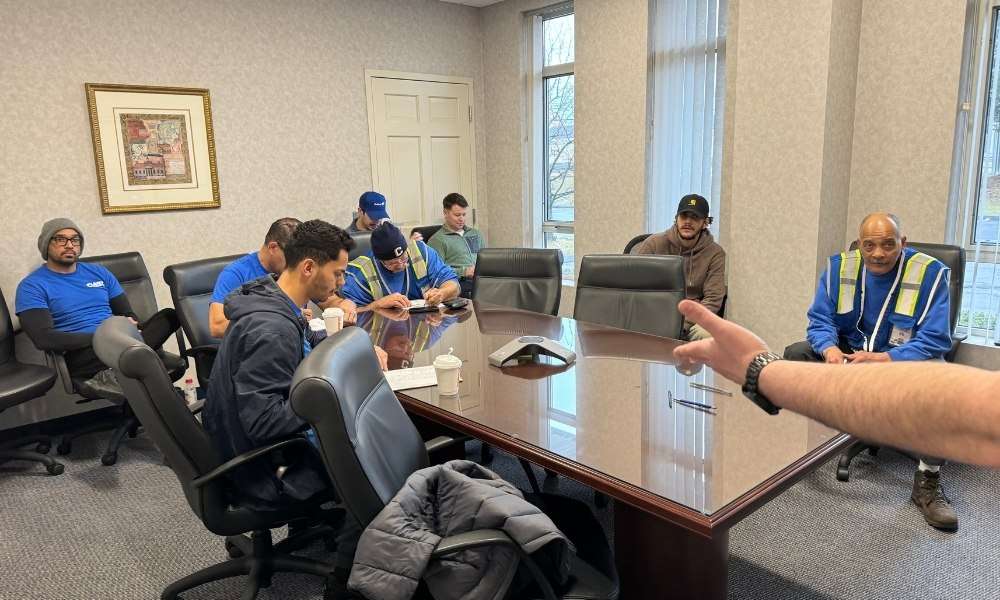
Vendor delivery coordination is a managed workflow where a logistics provider receives shipments from multiple manufacturers, inspects and inventories the freight, holds the assets in a warehouse, and delivers everything to the new facility in a planned sequence. The building never becomes a receiving dock, and installation crews never wait on missing pieces.
The workflow replaces a scattered approach where each vendor ships direct to the job site. Instead of ten carriers arriving on ten different days, one coordinated team controls what arrives, when it arrives, and where each item lands inside the building.
For Connecticut businesses, this model typically covers office furniture, FF&E, technology hardware, breakroom equipment, and branded fixtures. The same team handling receiving often handles final placement, which keeps accountability with a single point of contact from dock to desk.
Why Does Vendor Coordination Matter for Connecticut Facilities Teams?
Coordinated receiving matters because commercial buildings, construction schedules, and vendor lead times almost never align on their own. Facilities managers who plan the gap between shipment and installation avoid the most expensive surprises of a business relocation.
New Space Is Rarely Ready When Freight Ships
Manufacturers ship when production finishes, not when a certificate of occupancy is issued. Flooring delays, permit inspections, and fit-out punch lists routinely push move-in dates after furniture has already left the factory. A warehouse buffer absorbs that mismatch.
Buildings Are Not Built for Freight Receiving
Most office properties lack the dock capacity, forklifts, and trained staff to accept full truckloads. Property managers in Hartford and Springfield office corridors often restrict dock time and elevator use, which makes unmanaged deliveries a lease compliance issue as well as a scheduling one.
Damage Claims Depend on Documentation at Delivery
Concealed damage discovered weeks later is difficult to claim against a freight carrier. Inspection at the moment of receipt, with photos and signed delivery receipts, protects the value of the assets and supports any valuation coverage tied to the shipment.
What Goes Wrong When Vendor Deliveries Arrive Unmanaged?

Unmanaged vendor deliveries create predictable failures: freight refused at the dock, damage discovered too late, cartons stacked in the wrong rooms, and installers billing idle hours. Each failure traces back to the same root cause, which is no single party owning receiving.
- Refused or missed deliveries. No one on site is authorized to sign, the receiving area may not be ready, or building access may be limited. This can lead to redelivery charges, scheduling delays, or freight being left without proper coordination.
- Undocumented damage. Cartons may be signed for as “clear” without a careful inspection at delivery. If damage is discovered later, limited photos, notes, or delivery records can make follow-up with the carrier more difficult.
- Lost track of inventory. Hundreds of cartons arrive without a master manifest, and no one can confirm whether the shipment is complete until installation stalls.
- Site congestion. Pallets block corridors and fire exits while trades are still finishing the space. Federal workplace standards under OSHA’s materials handling rules require stored materials to be stacked securely and kept clear of aisles and passageways, a standard that improvised on-site storage rarely meets.
- Out-of-order installation. Case goods arrive before the electrician finishes floor cores, or task chairs show up a week before the workstations they belong to.
Each of these problems compounds during business relocation planning because delays on one floor push crews, elevators, and downtime windows across the entire schedule.
How Does the Vendor-to-Warehouse-to-Destination Workflow Work?
The workflow moves through six controlled stages, from the first inbound truck to the last installed workstation. Each stage produces documentation that feeds the next one, so the project team always knows what has arrived, what condition it is in, and where it goes.
Step 1: Consolidate Vendor Shipments at the Warehouse
All purchase orders list the logistics warehouse as the ship-to address. Inbound trucks arrive at a facility built for freight, with docks, forklifts, and receiving staff, instead of at an office building that cannot handle them.
Step 2: Inspect Freight at the Dock
Receiving crews open or examine shipments as carriers unload. Crushed cartons, punctures, and shortages get noted on the delivery receipt and photographed before the driver leaves, which preserves the claim record.
Step 3: Inventory and Tag Every Asset
Each item is logged against the purchase order and tagged with a destination code tied to the floor plan, such as building, floor, room, and workstation number. The running inventory shows the project team exactly what percentage of the order is on hand.
Step 4: Stage Assets in Installation Order
Crews organize the warehouse by delivery phase rather than by arrival date. Workstation frames that install the first stage near the dock; artwork and accessories that install the last stage deeper in the racking.
Climate-controlled warehouse storage protects wood veneers, upholstery, and electronics from temperature and humidity swings during the holding period. With multiple access control systems in place to ensure only authorized individuals can enter storage areas, belongings are kept safe.
Step 5: Deliver in Sequenced Waves
Deliveries are released to the site in waves matched to the installation schedule and the building’s access rules. Each truck carries a manifest for that phase only, so elevators, docks, and corridors handle one coordinated load instead of a backlog.
Step 6: Place, Install, and Close Out
Crews move assets to their tagged locations, complete furniture installation, remove packaging debris, and reconcile the final inventory against the original manifest. Any open damage claims or vendor backorders get documented for follow-up.
READ MORE: What Does a Commercial Move Mean? Key Points to Know
What Coordination Factors Shape the Relocation Timeline?
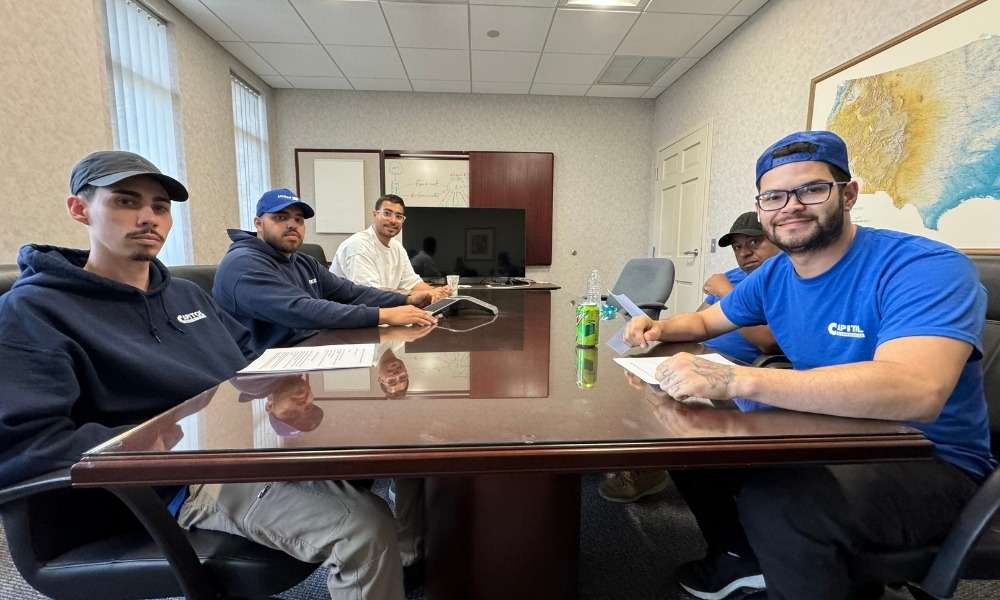
Timeline and cost depend on shipment volume, storage duration, building access rules, installation complexity, and carrier compliance requirements. Facilities teams that surface these factors early get realistic schedules instead of best-case guesses.
- Vendor lead times. Furniture manufacturing can run weeks or months, so warehouse booking should start as soon as purchase orders are issued.
- Building access. Dock reservations, elevator protection, after-hours windows, and certificate requirements from property management all constrain when delivery waves can run.
- Storage duration. Construction delays extend holding periods, which affects both warehouse space planning and project budgets.
- Carrier credentials. Shipments crossing state lines must move on properly authorized carriers. Companies transporting cargo interstate are required to register with the FMCSA and hold a USDOT number, a detail worth verifying for every carrier touching the project.
- Labor coordination. Union requirements, trade sequencing, and business continuity needs determine whether installation runs during business hours, overnight, or across a weekend.
Because every project mixes these variables differently, total cost varies with scope, volume, storage time, and access conditions. The most reliable approach is a site walkthrough and a written estimate from the provider rather than a generic figure.
Frequently Asked Questions
Can vendor deliveries be coordinated across multiple Connecticut locations?
Yes. Logistics services in Connecticut may coordinate receiving and scheduled releases for more than one office, facility, or project site. The plan can separate inventory and delivery timing by location so each destination receives the items assigned to it.
What information should vendors provide before shipping to a logistics warehouse?
Vendors should generally provide shipment references, expected quantities, delivery details, and any special handling notes. Clear information helps the receiving team match incoming freight to the correct commercial relocation project and destination.
How are vendor returns or replacement shipments handled during a commercial move?
Returns and replacements can usually be coordinated as part of the receiving process. The logistics team may document the affected items, separate them from usable inventory, and coordinate next steps with the vendor or project contact.
Who should approve the release of stored assets to the new facility?
The project should identify authorized contacts before delivery begins. During business relocation planning, a facilities manager, project lead, or other designated representative can confirm when stored assets are ready to move from the warehouse to the destination.
Can specialty equipment or technology deliveries be coordinated separately from furniture?
Yes. Depending on the project, commercial movers in Connecticut may schedule certain equipment, technology, or specialty items separately from standard furniture deliveries. Different handling, access, or installation needs can be incorporated into the overall delivery plan.
Ready to Coordinate Your Vendor Deliveries the Right Way?
Capitol Relocation & Logistics provides commercial moving, warehousing, delivery coordination, and office furniture installation support for businesses throughout Connecticut and Massachusetts.
Services can be organized around project schedules, vendor requirements, building access, and move-in timelines. A coordinated receiving plan can help keep deliveries organized and reduce delays during installation.
Talk to a specialist about your project.