

What’s In This Guide
- Why Retail Relocations Need More Planning Than a Standard Office Move
- Common Retail Relocation Risks and Planning Mistakes To Avoid
- How to Plan a West Hartford Retail Store Relocation Step by Step
- How to Maintain Accountability for Inventory, Fixtures, and POS Equipment During Transit
- What Affects Cost and Timeline for a Retail Store Move
- When to Bring In a Professional Commercial Moving Team
- Frequently Asked Questions
- Ready to Plan Your West Hartford Retail Relocation?
A retail relocation has to account for ongoing business operations as well as the physical move. Registers may remain active until shortly before shutdown, inventory needs to stay organized and sellable, and fixtures need to be dismantled and reassembled according to the planned merchandising layout. For a retailer relocating within West Hartford, CT, whether that means shifting a storefront along LaSalle Road, moving into West Hartford Center, or relocating to a new plaza off New Britain Avenue, a major challenge is protecting sales continuity while everything from POS terminals to display cases changes hands.
Finding commercial movers near you who understand retail operations, not just furniture transport, is what separates a relocation that costs a weekend from one that costs a month of lost sales. This guide walks through the planning, sequencing, and coordination steps that keep a West Hartford retail move on schedule for reopening day.
Quick Facts
- An inventory freeze can pause incoming shipments, transfers, and non-urgent returns before moving day, making final inventory counts easier to reconcile during packing and transit.
- Retailers that store, process, or transmit cardholder data must follow applicable PCI DSS requirements designed to protect payment account data, including during the disconnection, transport, and reconnection of POS equipment.
- Parking, loading access, landlord requirements, and active construction can affect move scheduling in West Hartford’s commercial districts, so retailers should confirm current access requirements before moving day.
Why Retail Relocations Need More Planning Than a Standard Office Move

A retail move has to account for both physical inventory and the customer-facing environment that supports sales. Retail businesses may have less tolerance for downtime because even short closures can interrupt foot traffic, transactions, and revenue.
Retail spaces also carry more fixed infrastructure than most commercial spaces. Shelving units, display cases, mannequins, checkout counters, and signage are all built around a specific floor plan. Moving them means disassembling a merchandising system, not just relocating furniture.
POS systems add another layer of coordination. Card readers, network hardware, and register terminals should be disconnected and restored according to the retailer’s IT plan and reopening sequence so payment processing can be tested before the store reopens.
Common Retail Relocation Risks and Planning Mistakes To Avoid
Skipping the Inventory Freeze
Without a defined freeze window, incoming shipments, transfers, and returns keep moving right up until the truck arrives. That creates count mismatches that are hard to untangle once the product is boxed and in transit.
Disconnecting POS Systems Without a Data Plan
POS environments may handle transaction records, customer information, and payment account data, depending on the system configuration. Before shutdown, follow the POS provider’s or IT team’s approved backup, configuration, and disconnection procedures. Skipping those procedures can create data-loss, configuration, or testing problems that delay reopening.
Underestimating Fixture Disassembly Time
Built-in shelving, wall-mounted displays, and custom counters often take longer to safely dismantle than retailers expect. Rushing this step increases the risk of damaged fixtures or delayed reassembly at the new location.
Ignoring Local Access and Loading Restrictions
The Town of West Hartford reports ongoing infrastructure work in West Hartford Center, including reconstruction along LaSalle Road and Farmington Avenue, with completion anticipated in November 2026. Retailers moving in or near the affected area should review current project updates and confirm parking, loading, landlord, and site-access requirements before scheduling the move.
How to Plan a West Hartford Retail Store Relocation Step by Step
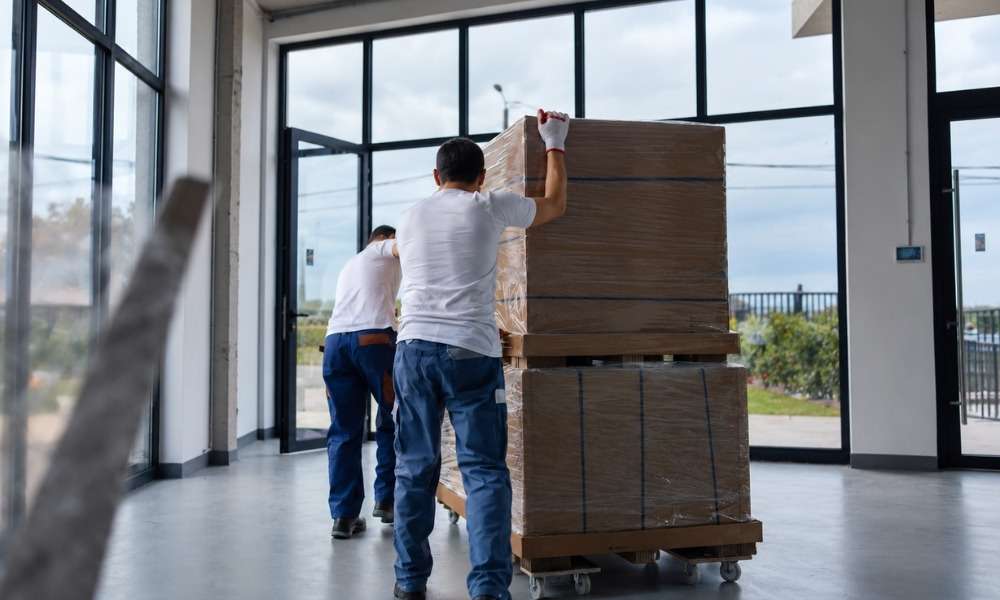
Step 1: Set an Inventory Freeze Window
Choose the inventory freeze window based on shipment schedules, sales activity, and move timing. Pause incoming shipments, transfers, and non-urgent returns before packing begins so staff have time to reconcile stock against the final pre-move count.
Step 2: Inventory and Tag Every Fixture and Display
Walk the sales floor and document shelving units, display cases, counters, signage, and mannequins. Tag each piece by department or section so it can be reassembled in the same merchandising order at the new location.
Step 3: Back Up and Sequence POS Disconnection
Before disconnecting registers, card readers, or network hardware, follow the retailer’s approved IT and POS procedures for backing up applicable data and documenting system settings. POS equipment should be disconnected and reconnected according to the reopening sequence and any requirements from the POS provider or IT team. Throughout the move, follow applicable PCI DSS controls and internal security procedures for protecting payment account data and the cardholder data environment.
Step 4: Schedule After-Hours or Overnight Moving Windows
Coordinate move timing around store hours, landlord access rules, and any municipal loading restrictions in West Hartford’s commercial districts. After-hours or overnight scheduling reduces the chance of blocked deliveries during business hours.
Step 5: Sequence Delivery and Reassembly for Reopening Day
Plan the unloading and setup sequence around the new floor plan and the dependencies between fixtures, merchandise, and POS equipment. Fixtures that must be installed before stocking should be positioned early, while POS equipment should be available in time for the IT or POS team to reconnect and test it before reopening. The exact unloading order should follow the store’s setup plan rather than a fixed sequence.
Step 6: Ensure Safe Fixture Handling
Heavy fixture lifting can create recognized workplace hazards. OSHA notes that hazards related to heavy lifting and back injuries may be addressed under the OSH Act’s General Duty Clause when applicable.
READ MORE: What Does a Commercial Move Mean? Key Points to Know
How to Maintain Accountability for Inventory, Fixtures, and POS Equipment During Transit
Use a Detailed Move Manifest for Retail Assets
Create a master inventory that lists the items being moved, along with their department, destination area, and identifying information where appropriate. The manifest can include:
- Merchandise by category or department
- Shelving, display cases, counters, and signage
- POS terminals, card readers, printers, and scanners
- Network equipment and related peripherals
- High-value or fragile retail assets
For larger moves, West Hartford retail movers can work from the same manifest to keep loading and delivery aligned with the store’s setup plan.
Document Condition Before Loading
Before items leave the original store, record the condition of major fixtures and equipment. Photos can be especially useful for glass displays, custom counters, shelving systems, and electronics.
For fixture moving, this step helps establish whether scratches, dents, loose components, or other issues were present before transport. It also gives the reassembly team a visual reference for how fixtures were configured before disassembly.
Verify Everything Before Reassembly and Stocking
Once the shipment arrives, compare delivered items against the move manifest before fixtures are installed or merchandise is placed on the sales floor.
Check that:
- All labeled inventory has arrived
- Fixture components and hardware are complete
- POS equipment matches the equipment list
- Fragile items show no visible transit damage
- Each item has reached the correct department or setup area
Completing this check early helps prevent teams from discovering missing equipment only when they are trying to reopen.
What Affects Cost and Timeline for a Retail Store Move

Retail relocation costs vary based on square footage, distance between locations, the number and complexity of fixtures, and whether POS or network equipment needs specialized handling. Timeline depends heavily on access conditions and how much after-hours work is required to avoid closing during business hours.
Factor | Why It Affects Cost or Timeline |
Store size and fixture count | More shelving, counters, and displays mean more disassembly and reassembly time |
Distance between locations | Longer routes affect labor hours and scheduling |
POS and IT complexity | Systems requiring careful disconnection and reconnection add coordination time |
Access and parking restrictions | Limited loading zones may require after-hours or overnight scheduling |
Reassembly and merchandising needs | Rebuilding displays to match the original layout takes additional labor |
Because every retail move has a different scope, estimates should be based on the specific store rather than a general average. An on-site walkthrough allows a commercial moving team to assess fixtures, access points, and timing before preparing an estimate.
When to Bring In a Professional Commercial Moving Team
A retailer managing a small, single-fixture space with minimal POS infrastructure may be able to coordinate a short move independently. Once a relocation involves multiple fixture types, active POS terminals, tight reopening deadlines, or restricted loading access, professional coordination becomes far more practical than an internal effort.
Experienced West Hartford retail movers can provide dismantling and reassembly support, sequencing plans for delivery and setup, and coordination around local access requirements. That planning can help keep the reopening schedule realistic.
Frequently Asked Questions
How far in advance should a West Hartford retailer plan a store relocation?
The lead time for a retail relocation depends on store size, fixture complexity, POS and IT coordination, access requirements, and the target reopening date. Starting several weeks in advance can provide time for inventory planning, fixture tagging, vendor coordination, and a walkthrough with a commercial moving team before the move date is finalized.
Who should disconnect and reconnect POS and network equipment during a retail move?
Retailers should determine whether POS terminals, network hardware, and related technology need to be handled by an internal IT team, POS provider, or another qualified vendor. The moving team can then coordinate transportation around that schedule so equipment is available when technicians are ready to reconnect and test it at the new location.
What should a retailer have ready before getting a commercial moving estimate?
Before requesting an estimate, gather information about both locations, including approximate store size, fixture quantity, inventory volume, access conditions, desired move date, and equipment requiring special handling. Floor plans and an on-site walkthrough can also help West Hartford retail movers understand the scope of the project and identify potential scheduling or access challenges.
Can a retail store relocation be completed in phases?
Yes, some retail relocations can be divided into phases when the lease schedule, store layout, and business operations allow it. Nonessential inventory, back-office equipment, or certain fixtures may be moved before customer-facing systems. A phased retail store relocation still requires careful coordination so merchandise, technology, and essential equipment remain available where employees need them.
What happens if store fixtures do not fit the new retail space?
Fixture dimensions should be compared with the new floor plan before moving day. Door widths, ceiling heights, wall dimensions, electrical locations, and available floor space can all affect whether existing shelving, counters, or displays will work in the new location. Identifying these issues early allows the retailer to adjust the merchandising plan and fixture moving strategy before reassembly begins.
Ready to Plan Your West Hartford Retail Relocation?
A retail move depends on careful sequencing, coordination, and safe handling. Capitol Relocation & Logistics has decades of experience providing commercial moving services in the Hartford area.
An on-site walkthrough can help establish a realistic timeline and estimate for a specific storefront.